Your Right to Your Crash Report After a Missoula Wreck
Key Takeaways: Montana generally treats crash reports as confidential records, but MCA § 61-7-114(2) lets certain people examine and copy an accident report filed by law enforcement, such as the Montana Highway Patrol, without a court order. Entitled parties include anyone named in the report or involved in the crash, a representative they designate in writing, their insurance carrier, any party to a related civil lawsuit, and, if the person has died, the estate’s executor, administrator, or their attorney. The general public may access reports only to research a vehicle’s history, and identifying details are withheld. A crash report can support an injury claim under Montana’s comparative negligence rule, but it may contain errors and works best alongside photos, medical records, and other evidence. Requesting a report does not pause filing deadlines, which are generally three years for bodily injury and two years for property damage. Acting early can help preserve evidence like surveillance footage and protect your ability to pursue compensation.
After a collision on Reserve Street, Interstate 90, or U.S. Highway 93 near Missoula, the official crash report can be one of the most useful records in your injury claim. Montana treats these reports as confidential, so not everyone can get one. Under MCA § 61-7-114(2), however, certain people may examine and copy an accident report filed by law enforcement, including the Montana Highway Patrol, without a court order. That group includes anyone named in the report or involved in the crash, a representative they designate in writing, their insurance carrier, any party to a related civil lawsuit, and, if the person has died, the estate’s executor or administrator or that person’s attorney. If you were hurt, you are likely an entitled party.
If you are dealing with injuries, medical bills, or an insurer that disputes what happened, you do not have to sort through the records process alone. The attorneys at Tipp Coburn Lockwood P.C. help injured people in Missoula and western Montana gather evidence and pursue compensation. Call 406-506-0575 or contact us now to schedule a free consultation.
Why Montana Keeps Crash Reports Confidential
Montana law starts from the position that crash reports are confidential. Under MCA § 61-7-114(1), required accident reports and supplemental reports are for the confidential use of the department and other government agencies. The statute lists the purposes these reports may serve: accident prevention, roadway design, monitoring motor carrier safety, and enforcing Montana’s financial responsibility and security deposit laws.
The statute also says reports are made without prejudice to the person who files them. This keeps required filings from being used against the filer. For injured people, confidentiality cuts both ways. It protects your privacy, but you may need to show that you qualify before an agency releases the full report.
Except as the statute allows, these reports are not open to general public inspection, and copying lists of reports is generally not allowed. MCA § 61-7-114(2) sets out the exceptions, which is why these documents are better described as confidential crash records than ordinary public records. You can read the full text of Montana’s accident report statute on the Montana Legislature’s website.
Who Qualifies as an Entitled Party Under Montana Law
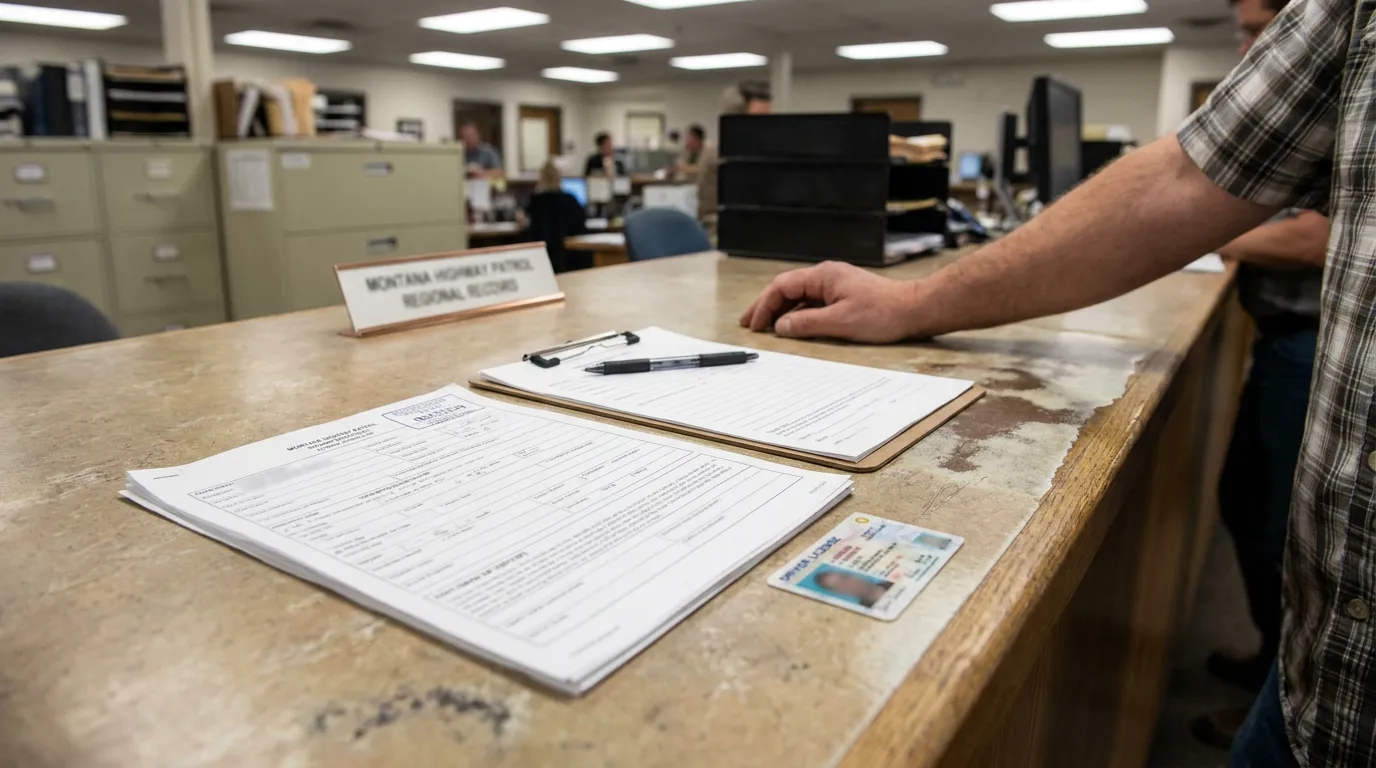
MCA § 61-7-114(2) names specific people who may examine and copy the report and its supplemental information without a court order. That access covers witness statements and applies to reports filed by law enforcement, including Montana Highway Patrol reports. The categories are:
- People named in or involved in the accident (MCA § 61-7-114(2)(a)): for example, drivers, passengers, pedestrians, and vehicle owners named in the report.
- Designated representatives and insurers (MCA § 61-7-114(2)(b)): a representative designated in writing by a person named in or involved in the accident, or that person’s insurance carrier.
- Civil litigants (MCA § 61-7-114(2)(c)): any party to a civil lawsuit that arises from the accident.
- Estate representatives (MCA § 61-7-114(2)(d)): if the person has died, the executor or administrator of the estate, or the attorney representing them.
Injured Drivers, Passengers, and Pedestrians
If you were in the crash, the law generally gives you direct access. That may include a rideshare passenger, a motorcyclist hit at an intersection, and a pedestrian struck in a crosswalk. Vehicle owners who were not behind the wheel may also qualify under MCA § 61-7-114(2)(a) if they are named in the report.
Attorneys and Insurance Carriers
A written designation generally lets your attorney get the report for you. Under MCA § 61-7-114(2)(b), a Missoula crash victim can authorize a lawyer in writing to obtain the full report. Insurers of people named in or involved in the crash may get it too, so the at-fault driver’s adjuster may already be reading the same report you are. Getting your own copy early helps you see what the insurer sees.
💡 Pro Tip: Keep a signed copy of any written authorization you give your attorney. Agencies may ask to see it before they release the full report.
Estates in Fatal Crash Cases
When a person involved in a crash has died, the estate’s representative may get the report. MCA § 61-7-114(2)(d) gives access to the executor or administrator, or the attorney representing them. This can matter greatly in wrongful death and survival claims, where families often must rebuild what happened without the person who was there.
What the Public Can See in Montana Highway Patrol Accident Reports
The general public gets only limited access to accident reports. Under MCA § 61-7-114(2)(e), members of the public, including commercial entities, may access reports only to research a vehicle’s history. Used car buyers and vehicle history services often rely on this provision.
Personal identifying details are protected in those public requests. The department may not disclose names, addresses, phone numbers, or other identifying information of reporting persons, accident victims, peace officers, other persons, or insurers named in the report or in witness statements.
| Requester | Access Under MCA § 61-7-114(2) |
|---|---|
| Person named in or involved in the crash | Full report, including witness statements |
| Written designee or insurer | Full report |
| Party to a related civil lawsuit | Full report |
| Estate executor, administrator, or their attorney | Full report |
| General public or commercial entities | Vehicle history only; identifying details withheld |
How a Crash Report Can Support Your Injury Claim
A crash report can give you an early picture of how officers saw the collision. Reports often record road conditions, vehicle positions, citations issued, and witness contact details. Witness statements can be especially valuable, because memories fade and witnesses can be hard to find months later.
Fault and Montana’s Comparative Negligence Rule
Fault matters in Montana because of the comparative negligence standard in MCA § 27-1-702. An injured person generally may recover damages only if their own negligence was not greater than the combined negligence of the parties they seek recovery from, and any award is reduced by their percentage of fault. Insurers often try to shift blame onto injured people to cut or deny payment. A report that supports your account may help push back, although it is not the final word on fault.
Limits of What a Report Proves
A police report is one piece of evidence and may contain errors. Officers often arrive after the crash and depend on statements from people who may be shaken or biased. Whether a report can be admitted at trial, and how much weight it carries, depends on evidence rules and the facts of the case. Photographs, medical records, vehicle data, and independent witness testimony often carry as much weight, and sometimes more. Montana’s motor vehicle records laws also govern other driver records that may come up in a claim.
💡 Pro Tip: If the report has a factual mistake, such as the wrong lane or direction of travel, write down the correction and gather supporting photos right away. The agency may or may not amend the report, but that documentation may still help your claim.
Deadlines That Keep Running While You Wait
Requesting a report does not pause Montana’s filing deadlines. Under MCA § 27-2-204, bodily injury claims generally must be filed within three years. Under MCA § 27-2-207, property damage claims generally must be filed within two years. Tolling exceptions apply only in limited circumstances, and claims against government entities may have separate claim-filing requirements.
Acting early can help protect evidence beyond the report itself. Surveillance footage from businesses along Brooks Street or Broadway may be overwritten within days or weeks. A Montana Highway Patrol accident reports lawyer can help you request records, send preservation letters, and track deadlines while you focus on recovering.
Frequently Asked Questions
1. Do I need a court order to get my Missoula crash report?
Generally, no, if you are an entitled party. MCA § 61-7-114(2) lets people named in the report or involved in the accident, their written designees, insurers, civil litigants, and estate representatives examine and copy the report without a court order.
2. Can I get the witness statements?
Entitled parties may get supplemental information, including witness statements. This applies to reports filed by law enforcement, such as the Montana Highway Patrol.
3. Can the other driver’s insurance company get my report?
Yes, generally. MCA § 61-7-114(2)(b) gives access to the insurance carrier of a person named in or involved in the accident. Assume the adjuster has reviewed the report before talking to you.
4. Can a stranger look up my crash?
Only in limited form. Under MCA § 61-7-114(2)(e), the public may research a vehicle’s history, but the department may not disclose names, addresses, phone numbers, or other identifying information.
5. What if my loved one died in the crash?
The estate’s executor or administrator, or that person’s attorney, may get the report under MCA § 61-7-114(2)(d). This access can be important in wrongful death cases.
Putting Your Crash Report to Work
Montana keeps crash reports confidential, but the law gives injured people and their representatives a path to access them. If you were involved in a Missoula crash, you are likely an entitled party under MCA § 61-7-114(2). The report can support your claim, but it works best alongside other evidence and well within Montana’s filing deadlines. For more guidance on recovering after a collision, visit our Missoula injury law blog.
You do not have to face insurers on your own while you heal. Tipp Coburn Lockwood P.C. can help you get your records, protect the evidence, and pursue the compensation you may be owed. Call 406-506-0575 or schedule your free consultation today.
Disclaimer: This content is for informational purposes only and is not legal advice. Every case is unique, and results may vary. Consult an attorney about your specific circumstances.