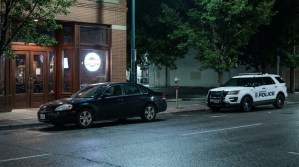
When Missoula Police Wait Outside the Bars: What the Law Allows
Key Takeaways: Missoula police generally cannot stop you just because you left a downtown bar. Montana law requires particularized suspicion that you have committed, are committing, or are about to commit an offense. Leaving a bar is lawful, so officers usually rely on traffic violations or signs of impairment, such as weaving, speeding, or equipment problems, to justify a stop. During a lawful stop, officers may ask for your name, address, and an explanation of your actions. If you are the driver, they may also demand your license, registration, and proof of insurance. They may frisk you only if they have reasonable cause to suspect you are armed and presently dangerous. If a stop lacked a lawful basis, a motion to suppress under Mont. Code Ann. § 46-13-302 may keep evidence like breath results and statements out of court. Because every case depends on its facts, an experienced Missoula DUI lawyer should closely review how your stop happened.
Missoula police generally cannot stop you just because you walked out of a downtown bar or pulled out of its parking lot. Under Montana law, an officer needs "particularized suspicion" that you have committed, are committing, or are about to commit an offense. Leaving a bar is not, by itself, a crime. Officers still watch downtown Missoula closely at closing time, though, and often look for a traffic violation or sign of impairment that can justify a stop.
If you are facing a DUI charge after a stop near a bar, a careful review of how that stop happened may be important. The attorneys at Tipp Coburn Lockwood P.C. can look at the facts of your case and explain your options. Call 406-506-0575 or contact us now to start protecting your rights.
The Legal Standard: Particularized Suspicion in Montana
Montana sets its own rule for when police may stop a person or a vehicle. Under Mont. Code Ann. § 46-5-401(1), a peace officer may stop any person or vehicle observed in circumstances that create a particularized suspicion that the person or an occupant of the vehicle has committed, is committing, or is about to commit an offense. This is Montana’s statutory version of the reasonable suspicion standard under the Fourth Amendment and Article II, Sections 10 and 11 of the Montana Constitution. It requires less than probable cause, but more than a hunch. The officer must point to specific, objective facts and reasonable inferences drawn from them.
Because this is a state criminal procedure statute, it applies across Montana, including Missoula. City police, county deputies, and Montana Highway Patrol troopers are all subject to the same standard.
Why Leaving a Bar Is Not Enough on Its Own
Walking out of a bar or driving out of its lot is lawful conduct. An officer who stops a driver only because of where that driver had been, with no observed violation or sign of impairment, likely lacks the specific facts Montana law requires. Courts look at the totality of the circumstances, so location and a late hour may be part of the analysis, but they generally do not justify a stop alone.
What Officers Usually Point To Instead
Police often build their justification from observed driving behavior. Common examples include:
- Weaving, swerving, or failing to keep the vehicle in its lane
- Speeding, driving well under the limit, or erratic speed changes
- Rolling through a stop sign or making an illegal turn
- Driving without headlights at night
- Equipment problems, such as a broken taillight or expired registration
Any one of these observations may give an officer a legal basis for a stop, even near a bar. Some behaviors, such as briefly drifting within a lane, may not be enough on their own. That is why defense attorneys look closely at whether the claimed violation actually happened, whether it justified the stop, and whether video supports the officer’s account.
How Cops Waiting Outside Bar Districts Build DUI Cases
Cops waiting outside bar districts at closing time need more than a customer leaving. An officer may follow a driver for several blocks, hoping to see a lane deviation or traffic infraction. If the driver does nothing wrong and shows no sign of impairment, the officer may not have a lawful basis to stop, and a stop made anyway may be open to challenge.
Plainclothes officers sometimes watch bars as well. Under Montana’s stop statute, an officer who is not in uniform generally must promptly identify themselves as a peace officer.
💡 Pro Tip: Write down everything you remember about the stop as soon as you can, including your route, the time, and what the officer said was the reason for pulling you over. Your notes may help your attorney compare your account against police reports and video.
What Police May and May Not Do During a Lawful Stop
Once a stop is lawful, Montana law gives officers limited authority. Under Mont. Code Ann. § 46-5-401(2)(a), the officer may ask for your name, address, and an explanation of your actions. If you are the driver, the officer may also demand your driver’s license, registration, and proof of insurance. Under § 46-5-401(2)(b), a frisk is allowed only if the officer has reasonable cause to suspect you are armed and presently dangerous.
A stop is temporary and investigative, not an arrest. A stop may last no longer than necessary to carry out its purpose. If the officer wants to extend the stop, for example to give field sobriety tests, that extension needs its own particularized suspicion, such as the odor of alcohol, slurred speech, or an admission to drinking.
The Officer Must Tell You Why You Were Stopped
For traffic stops under Title 61, which includes DUI, Montana law requires the officer to tell you the reason for the stop as promptly as possible under the circumstances. Failing to state a reason does not automatically make a stop unlawful, because a court asks whether particularized suspicion actually existed. Still, an officer’s inability to state a clear reason may help support an argument that the stop lacked a lawful basis.
| Officer Action | Generally Allowed? | Montana Authority |
|---|---|---|
| Stop based on observed traffic violation | Generally yes | § 46-5-401(1) |
| Stop based only on leaving a bar | Likely not, depending on facts | § 46-5-401(1) |
| Ask for name, address, explanation | Yes, during a lawful stop | § 46-5-401(2)(a) |
| Demand license, registration, insurance | Yes, from the driver during a lawful stop | § 46-5-401(2)(a) |
| Frisk you | Only with reasonable cause to suspect you are armed and presently dangerous | § 46-5-401(2)(b) |
| Plainclothes questioning without ID | Generally no; must promptly identify as a peace officer | § 46-5-401 |
What Counts as DUI in Montana
A DUI charge depends on more than the stop, but the stop often affects what evidence the State can use. Under Mont. Code Ann. § 61-8-1002(1), a person commits DUI by driving, or being in actual physical control of, a vehicle on ways of the state open to the public while under the influence of alcohol, any drug, or a combination. A person also commits DUI with an alcohol concentration of 0.08 or more in a noncommercial vehicle, 0.04 or more in a commercial vehicle, or 0.02 or more if under 21, with the concentration generally shown by a test taken within a reasonable time after the alleged act, rather than any fixed time window. Separate limits apply for THC and certain listed drugs.
These lower limits mean commercial drivers and drivers under 21 may face added risk after a night downtown. In both situations, questioning the legality of the stop may be one of the strongest tools available.
Challenging an Unlawful Stop With a Motion to Suppress
If the stop was unlawful, the defense may ask the court to throw out the evidence that followed. Under Montana’s suppression statute, Mont. Code Ann. § 46-13-302(1), a defendant aggrieved by an unlawful search and seizure may move the court to suppress anything obtained through it. That could include field sobriety observations, breath or blood results, and statements made after the stop.
The motion must be in writing and state facts showing the search or seizure was unlawful. The court then decides the motion, usually after an evidentiary hearing, and if granted, the suppressed evidence is not admissible at trial. Losing key evidence can seriously weaken a DUI prosecution and, in some cases, may lead to dismissal. Results depend heavily on the facts, the available video, and how the court weighs the officer’s testimony. A separate administrative license suspension, such as one for refusing a test, follows its own procedures.
💡 Pro Tip: Ask your attorney early about preserving dash camera, body camera, and nearby business surveillance footage. Downtown businesses may record over their video quickly, and that footage could show how you were actually driving.
A Missoula DUI lawyer may also look at issues beyond the initial stop, including how field sobriety tests were given, whether breath testing equipment worked properly, and whether your rights were respected after arrest. You can learn more through our Montana criminal defense services.
Frequently Asked Questions
1. Can police legally park near downtown Missoula bars at closing time?
Yes. Officers may patrol and watch public areas, but stopping you requires particularized suspicion under Mont. Code Ann. § 46-5-401(1).
2. Is a minor traffic violation enough for a stop after leaving a bar?
In many cases, yes. An observed violation, even a small one, may give an officer a lawful basis to stop you. Your attorney may still challenge whether the violation actually occurred.
3. Do I have to answer questions during a Missoula traffic stop?
Officers may ask for your name, address, and an explanation of your actions, and may demand the driver’s license, registration, and proof of insurance under § 46-5-401(2). You generally have a constitutional right not to answer questions that could incriminate you. Whether to answer further questions is best discussed with a lawyer, because statements can become evidence.
4. What happens if the judge finds my stop was unlawful?
If a suppression motion is granted under § 46-13-302, the evidence obtained from the unlawful stop is not admissible at trial. This may weaken or end the prosecution, depending on what other evidence exists.
5. Where can I learn more about Montana traffic stop law?
Our DUI and traffic stop articles cover related topics. For advice about your own situation, speak directly with an attorney.
Protecting Your Rights After a Night Downtown
Leaving a bar is not, by itself, a crime, and Montana law requires officers to have particularized suspicion before stopping you. Police may still stop drivers for observed violations or signs of impairment. When the stop lacked a lawful basis, Mont. Code Ann. § 46-13-302 may give you a way to challenge the evidence. Every case turns on its own facts, so a close review of the stop is often the first step in building a defense.
If you were stopped after leaving a downtown Missoula bar, act quickly to protect your license and your future. Tipp Coburn Lockwood P.C. is ready to review your case and help you understand your options. Call 406-506-0575 or schedule your consultation today.
Disclaimer: This content is for informational purposes only and is not legal advice. Every case is unique, and results may vary. Consult an attorney about your specific circumstances.