When one accused of driving under the influence of drugs or alcohol enters a guilty plea, the court sets the case for trial. The trial must be held six months or less from the day the plea is entered unless the defendant causes the delay or there is good cause for the delay.
At trial, the State must prove all of the elements of the DUI charge beyond a reasonable doubt. What the State must prove depends upon whether the charge is for DUI or for a “per se” violation.
For DUI, the State must show that the driver was 1) operating or in actual physical control of a motor vehicle, 2) on a way of the state open to the public, and 3) while under the influence of alcohol and/or drugs. For a “per se” violation, the State must show the same first two elements, but instead of showing impairment, the State must only prove that the driver’s blood alcohol concentration was greater than .08 or contained more than 5 ng/ml of active THC. DUI crimes in Montana are strict liability, which means the State does not need to show the defendant knew he or she was violating the law.
The prosecutor may rely on certain evidence to meet the State’s burden of proof, including the arresting officer’s testimony, witness testimony, video of the accused when the offense occurred or shortly thereafter, the fact that the driver refused to take an alcohol concentration test or a blood test, and the results of the those tests, if they were given. Lay witnesses, such as the driver’s friends, other drivers, and bystanders, are allowed to testify about whether they believed the driver was intoxicated.
DUI crimes in Montana can be very complicated to properly and competently defend. Issues in DUI cases are varied and can, for example, include: medical conditions that affect the field sobriety tests or the alcohol testing process, scientific problems with the alcohol testing machines, and problems with field sobriety tests. These are but a few of the issues that arise in defending DUI cases.
The attorneys at Tipp & Buley have over 50 years of experience defending DUI and other criminal charges, including the trial of these difficult cases. We are dedicated to helping our clients achieve the best possible resolution to the legal issues they face. If you have been accused of DUI or a per se violation in Western Montana, contact our Missoula office online or call 406-812-7634.




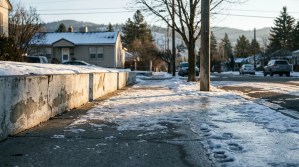
Who Is Liable for a Missoula Sidewalk Slip and Fall on Icy Snow?
Winter Falls on Missoula Sidewalks: Understanding Who Answers for the Ice Key Takeaways: In Missoula, liability for an icy sidewalk usually starts with the property owner or occupant whose land abuts the walkway, since city code requires clearing snow and ice by a set schedule. Missoula Municipal Code 12.16.030 requires