Understanding Court-Ordered Alcohol Testing After a Montana DUI
Key Takeaways: Whether you face 24/7 sobriety monitoring after a Missoula DUI arrest depends on your offense history and the judge’s order. Under Mont. Code Ann. §§ 44-4-1201 through 44-4-1205 and Mont. Admin. R. 23.18.302, courts may impose monitoring at bond, sentencing, probation, or parole stages, but eligibility under § 44-4-1205 is generally limited to individuals charged with or convicted of aggravated DUI or a second or subsequent alcohol-related offense. Under Mont. Code Ann. § 61-8-1010, for a first offense the court may order 24/7 monitoring or, with a probationary license recommendation, an ignition interlock; for repeat offenses, the court must impose one of those options or vehicle forfeiture. Participation typically means twice-daily breath tests roughly 12 hours apart or a continuous transdermal device, with participant-paid fees. The court order controls testing type and duration. Missed or failed tests can trigger bond or probation revocation, making early advocacy about work, transportation, and family obligations crucial.
If you were arrested for DUI in Missoula, whether you face twice-daily breath testing depends on your offense history and what a judge orders. Montana law creates a statewide monitoring framework courts may use at several case stages, with eligibility driven by court order rather than arrest. For first offenses, monitoring is typically discretionary; for repeat offenses, § 61-8-1010, MCA, generally requires the court to impose one of the listed options.
If you are facing a DUI charge in Missoula County, the attorneys at Tipp Coburn Lockwood P.C. can help you understand potential court conditions. Call 406-506-0575 or request a confidential case review to discuss your options.
What the Montana 24/7 Sobriety Program Actually Is
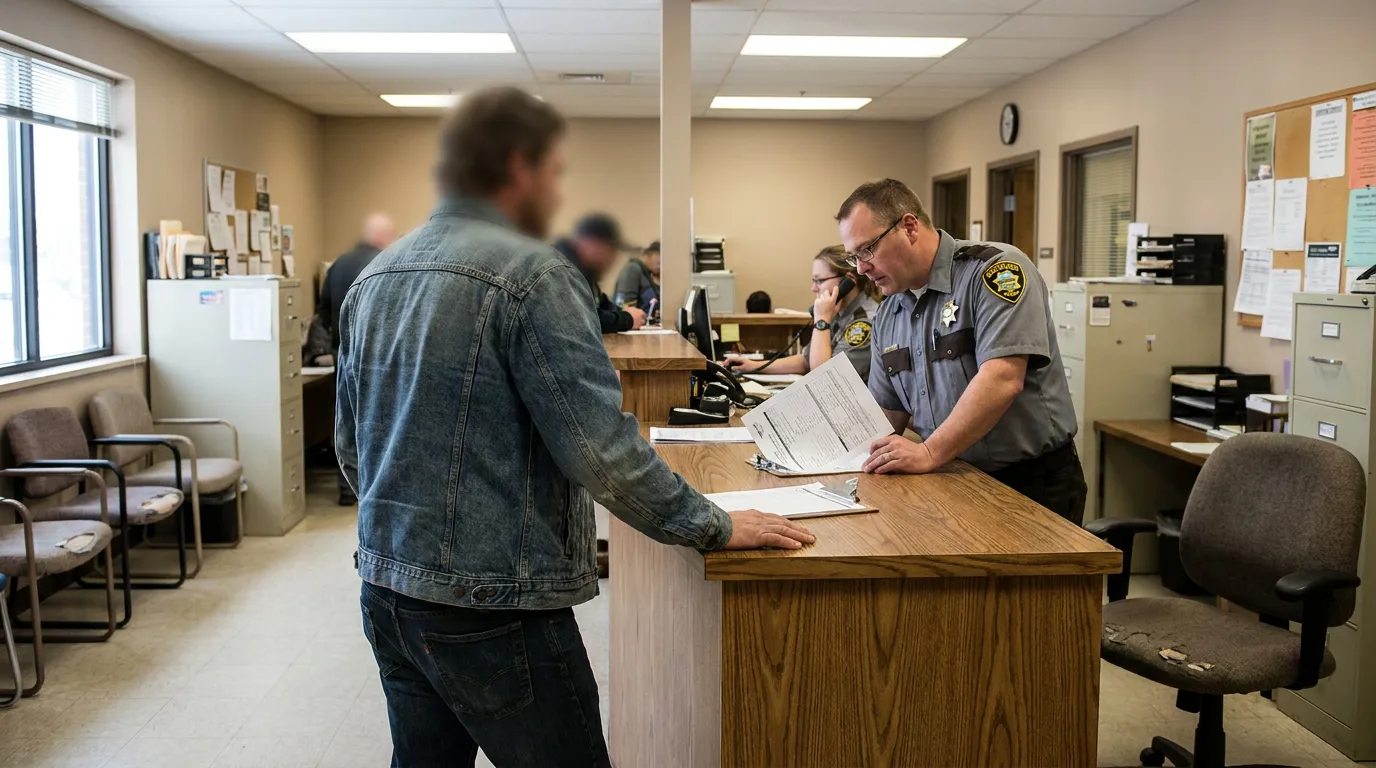
The program is a statewide monitoring system created by the Montana 24/7 Sobriety and Drug Monitoring Program Act. Under Mont. Code Ann. § 44-4-1201, the law is officially cited by that name, and Mont. Code Ann. § 44-4-1203 establishes the statewide program administered by the Attorney General. The statute identifies twice-a-day, in-person breath testing at a central location as one testing method for alcohol.
The design goal is speed of consequence rather than severity. Peer-reviewed research summarized in the Federal Sentencing Reporter describes 24/7 Sobriety as pairing frequent alcohol testing with swift, certain, and fair sanctions. Courts often view frequent testing as a middle path between unsupervised release and incarceration. Whether that helps or hurts a particular defendant depends on work schedules, transportation, and residence.
Who Statutorily Qualifies for Placement
Eligibility reaches beyond DUI convictions alone. The 24/7 program statutes, Mont. Code Ann. §§ 44-4-1202 through 44-4-1205, allow a court or authorized agency to require abstinence and testing as a condition of bond, sentence, probation, parole, or work permit for anyone charged with or convicted of aggravated DUI or a second or subsequent DUI or alcohol-related offense. The phrase "charged with" is significant, participation can attach before any conviction.
Placement can occur at several procedural stages. Mont. Admin. R. 23.18.302(1) provides that a participant may be placed in the program as a condition of bond or pretrial release, sentence or probation, or parole. A person arrested on a Friday night could face monitoring conditions at the initial appearance. The rule was adopted effective October 1, 2011, implementing §§ 44-4-1203, 44-4-1204, and 44-4-1205, MCA.
Discretionary Versus Mandatory Orders
The offense count usually determines whether the court has a choice. Guidance published by the Montana Department of Justice, drawing on § 61-8-1010, MCA, distinguishes first offenses from repeat offenses:
| Offense Level | Court’s Authority |
|---|---|
| First offense | Court may order 24/7 sobriety monitoring or an ignition interlock device |
| Second or subsequent offense | Court shall order 24/7 monitoring, ignition interlock, or vehicle forfeiture |
Under § 61-8-1010, MCA, the interlock option arises when the court recommends a probationary license, and the statute also permits a court-approved alcohol or drug detection testing program as an alternative. Vehicle forfeiture is limited to vehicles the person owned at the time of offense and follows procedures in § 61-8-1033, MCA.
Even mandatory language leaves room for advocacy. When a statute requires the court to choose among several options, counsel can argue for the alternative that least disrupts employment and family obligations. Felony penalties for a fourth or subsequent qualifying offense appear in Mont. Code Ann. § 61-8-1008, which also reaches anyone with a prior conviction under § 45-5-106 (vehicular homicide while under the influence).
What the Order Must Contain
A court order or directive triggers enrollment. Mont. Admin. R. 23.18.302(2) states that an order or directive placing a participant in the program should include the type of testing and the length of time that the participant is to remain in the program. This matters because sobriety monitoring criteria are individualized, not standardized.
No agency can enroll you on its own initiative. Under Mont. Admin. R. 23.18.302(4), a participating agency must receive a copy of the order or directive before enrolling a participant. Reviewing the paperwork carefully is one of the more overlooked steps in the Montana DUI arrest process.
💡 Pro Tip: Ask for a written copy of any monitoring order at your first court appearance and confirm the start date, testing type, and end date before you leave the courthouse.
What Participation Involves Day to Day
Participants generally either test twice daily in person or wear a continuous monitoring device. Under Mont. Admin. R. 23.18.302(3), a participant shall report for twice-daily breath tests or submit to testing through a continuous remote transdermal alcohol monitoring device for the length of time ordered by the court, the Board of Pardons and Parole, the Department of Corrections, or a parole officer. Full details appear in the Montana 24/7 sobriety regulation.
Local logistics fall to the sheriff’s office. Mont. Code Ann. § 44-4-1202 defines the law enforcement agency for program purposes as the county sheriff’s office or another agency it designates. Under § 44-4-1203, MCA, a participating agency using twice-daily testing must establish at least one testing location and two daily testing times approximately 12 hours apart. Specific locations and times vary by county.
Costs are typically shifted to the participant. Mont. Code Ann. § 61-8-1010 permits a court to require participation and payment of associated fees. Practical challenges commonly include:
- Arranging transportation twice a day without a valid license
- Coordinating testing windows around shift work
- Managing costs over monitoring periods that may last months
- Handling travel, illness, or weather events that interfere with reporting
Missed tests are treated seriously. A missed or positive test may lead to bond revocation or a probation violation petition, though the court retains discretion over outcomes. Anyone anticipating a scheduling conflict should raise it with counsel before the test is missed.
Where a Defense Attorney Can Make a Difference
Monitoring conditions are negotiable in many cases, particularly at the bond stage. Because Mont. Admin. R. 23.18.302 allows placement as a condition of pretrial release, arguments about employment, childcare, and rural travel distances can influence the court’s order. A Missoula DUI defense lawyer can also address whether transdermal monitoring is a more workable alternative than in-person testing.
The underlying charge deserves scrutiny regardless of monitoring conditions. Monitoring conditions do not resolve questions about the lawfulness of the stop, probable cause, field sobriety test administration, or breath or blood analysis reliability. Challenges to those issues proceed independently and, where successful, may affect whether any sentence-based monitoring is imposed.
💡 Pro Tip: Keep your own log of every test date, time, and result. If a discrepancy later appears in an agency record, contemporaneous notes can be valuable.
Mont. Code Ann. § 44-4-1205 addresses court-ordered participation, while probationary license availability in DUI cases is primarily governed by Mont. Code Ann. § 61-5-231 and Mont. Code Ann. § 61-8-1010, MCA. Those provisions can matter enormously to clients whose employment depends on driving. Additional discussion appears throughout our Montana criminal law insights.
Frequently Asked Questions
1. Can I be placed in the program before I am convicted?
Yes. Mont. Admin. R. 23.18.302(1) expressly permits placement as a condition of bond or pretrial release, and the 24/7 program statutes reach people charged with a qualifying offense, not only those convicted.
2. Is monitoring automatic after a first-offense DUI arrest?
No. Department of Justice guidance interpreting § 61-8-1010, MCA, indicates that for first offenses a court may order 24/7 monitoring or an ignition interlock device with a probationary license recommendation, leaving the decision to judicial discretion.
3. How long does participation last?
It depends on the order. Mont. Admin. R. 23.18.302(2) and (3) contemplate that the ordering authority specifies both testing type and duration, so periods vary between defendants.
4. Who pays for the testing?
Under § 61-8-1010, MCA, a court may require the participant to pay program fees. Fee structures are set administratively and can change.
5. What happens if I miss a scheduled test?
Consequences depend on your procedural posture. A missed test may support a motion to revoke bond or a probation violation petition, with courts considering the reason for absence and overall compliance record.
Protecting Your Rights While the Case Is Pending
Montana’s 24/7 sobriety program framework turns on statutory offense level and judicial discretion, with placement authorized at bond, sentencing, probation, and parole stages under Mont. Code Ann. §§ 44-4-1201 through 44-4-1205 and Mont. Admin. R. 23.18.302, but eligibility is generally limited to individuals charged with or convicted of aggravated DUI or a second or subsequent alcohol-related offense. First offenses generally involve discretionary orders under § 61-8-1010, MCA, while repeat offenses generally require the court to select among monitoring, interlock with probationary license, or forfeiture. Because the order controls testing type and duration, early advocacy about your circumstances can meaningfully shape the next several months.
If you are navigating 24/7 sobriety eligibility in Missoula after a DUI arrest, the team at Tipp Coburn Lockwood P.C. is prepared to review your situation and advocate for workable conditions. Call 406-506-0575 or schedule your consultation today to get started.