When a Truck’s Rear Guard Fails: Understanding Underride Crashes in Missoula
Key Takeaways: A semi-truck underride guard defect occurs when the rear impact guard beneath a trailer fails to stop a passenger vehicle from sliding underneath during a collision, turning a survivable crash into a catastrophic one. Failures can stem from design flaws, manufacturing errors, improper installation, maintenance neglect, or failure to warn, each pointing toward a different responsible party. Montana claims often combine general negligence under Mont. Code Ann. § 27-1-701 with strict product liability under Title 27, Chapter 1, Part 7, including § 27-1-719, which imposes liability on sellers of unreasonably dangerous products and sets out limited statutory defenses. Potential defendants include trailer manufacturers, component suppliers, motor carriers, maintenance contractors, and drivers, though Montana’s modified comparative negligence rule under § 27-1-702 can reduce or bar recovery on negligence claims. Physical evidence can disappear quickly, since trailers are often repaired, scrapped, or returned to service and electronic records may be purged within weeks. Mont. Code Ann. § 27-2-204 sets a three-year filing deadline for most personal injury claims, making prompt investigation and preservation demands important.
A semi truck underride guard defect occurs when the steel bar mounted beneath the rear of a trailer fails to stop a passenger vehicle from sliding underneath during a collision. That bar, known as a rear impact guard, exists to keep the passenger compartment from being sheared open at windshield height. When the guard is poorly designed, improperly welded, corroded, or missing, a survivable rear-end collision can become catastrophic or fatal. Under Montana law, such a failure may support claims against the trailer manufacturer, component supplier, motor carrier, or maintenance provider, depending on the evidence.
If you or a family member were hurt in an underride collision in western Montana, the team at Tipp Coburn Lockwood P.C. is available to review what happened. Call 406-506-0575 or contact us now before critical evidence disappears.
How Rear Impact Guard Defects Actually Happen
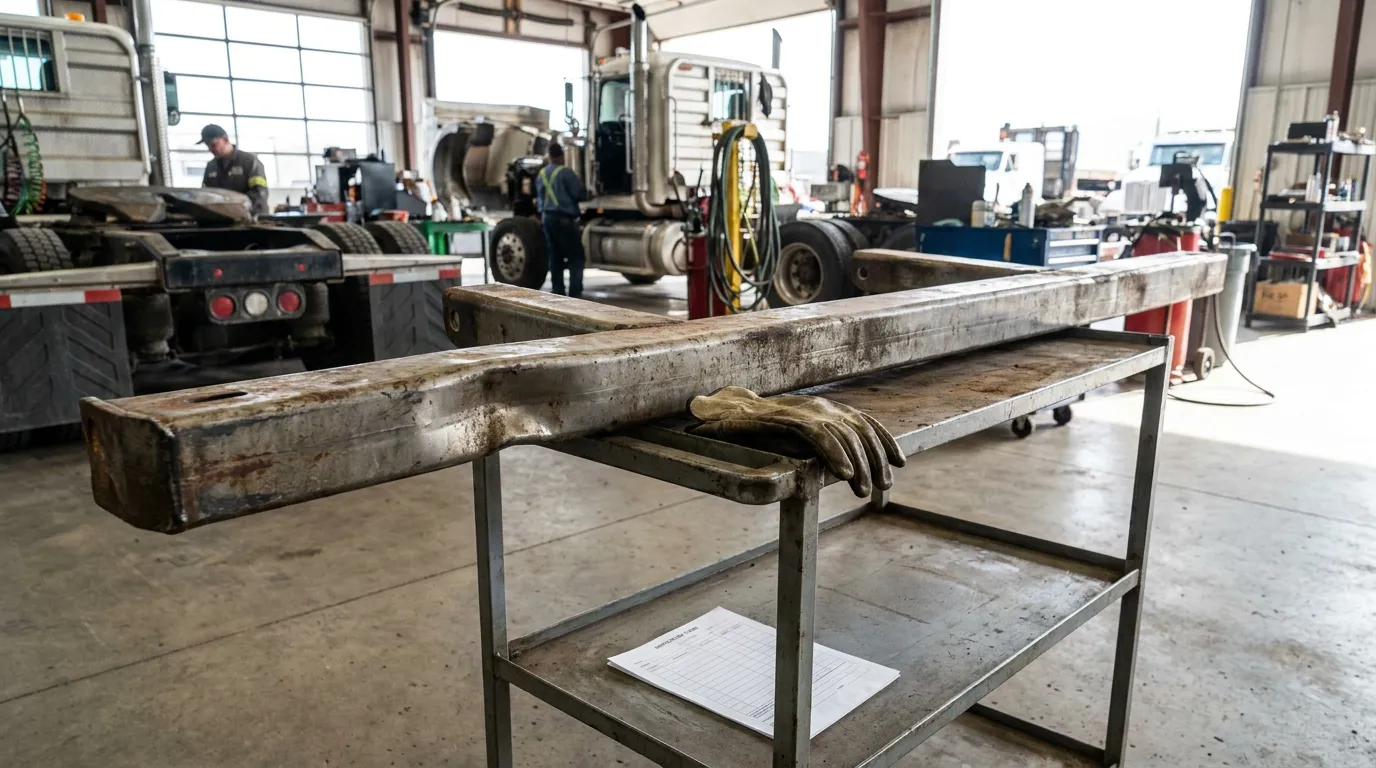
Underride guard failures rarely look dramatic before the crash, which is part of why they may go unnoticed for years. A guard may appear intact while its mounting brackets have rusted internally, or its welds were never completed to specification. The failure typically only becomes obvious after a collision, as a bent or detached bar and a crushed roof.
Investigators generally look at several distinct failure categories, each potentially pointing toward a different responsible party:
- Design defects, where the guard’s geometry, strength, or attachment points were inadequate even when built as intended
- Manufacturing defects, where a specific unit departed from the design through bad welds, substandard steel, or incorrect assembly
- Installation and retrofit errors, where a guard was mounted at the wrong height or bolted to a frame that could not bear the load
- Maintenance neglect, where corrosion, prior crash damage, or missing hardware went uncorrected across inspection cycles
- Failure to warn, where a manufacturer knew or should have known of a weakness and failed to communicate it to fleet owners
Not every underride crash involves a defect. Offset impacts, extremely high closing speeds, and side or front underride scenarios may fall outside what a rear guard was ever engineered to handle. A thorough investigation examines whether the guard performed as a reasonably safe product should have under the actual crash conditions.
The Statutes Behind a Semi Truck Underride Guard Defect Claim
Montana’s core negligence rule generally provides the starting point for most underride cases. Under Mont. Code Ann. § 27-1-701, every person is responsible for injury caused by their want of ordinary care in managing property or themselves, subject to statutory exceptions. This may support claims that a carrier failed to inspect, repair, or replace a compromised guard, statewide including Missoula County.
Product liability claims are governed by Title 27, Chapter 1, Part 7 of the Montana Code Annotated, addressing claims against manufacturers and sellers of defective products, including rear impact guards. Within that part, Mont. Code Ann. § 27-1-719 codifies strict liability for a seller who places a product on the market in a defective condition unreasonably dangerous to users, and sets out recognized statutory defenses, including unforeseeable alteration or misuse and assumption of risk.
Evidentiary questions about federal standards deserve emphasis, because defendants often lean on them. Federal standards such as FMVSS 223 and FMVSS 224, applying to most trailers manufactured on or after January 26, 1998, along with FMCSA equipment requirements at 49 C.F.R. § 393.86, establish minimum performance criteria for rear impact guards. A manufacturer or carrier may argue that meeting those minimums shows the guard was not defective. Under current Montana law, as amended by SB 216 effective May 4, 2023, compliance with mandatory safety statutes creates a rebuttable presumption that the product was not defective and the manufacturer was not negligent under Mont. Code Ann. § 27-1-719(7). This presumption is not a complete defense, a plaintiff may still present sufficient evidence to rebut it, but it carries substantially more legal weight than mere relevant evidence, representing a significant change from prior Montana law. Whether a plaintiff can successfully rebut the presumption is fact-dependent and generally turns on engineering proof and the trial court’s evidentiary rulings.
A Missoula case may combine both theories rather than choosing between them. Plaintiffs generally need to satisfy Montana’s specific product liability elements, including proof that the product was defective and unreasonably dangerous when it left the seller’s control and that the defect proximately caused the harm, rather than relying on generic negligence allegations alone. Working with a Missoula semi-truck injury attorney early can help identify which theories the evidence will support.
Who May Be Held Responsible After an Underride Collision
Underride cases frequently involve more defendants than a typical car crash claim. The trailer manufacturer, guard component supplier, motor carrier, third-party maintenance shop, and driver may each bear some responsibility. Identifying all of them early matters because each may hold different records.
Manufacturers and Component Suppliers
Manufacturers may face exposure when the guard’s design or construction fell below what a reasonably safe product requires. Proving this generally requires metallurgical analysis, review of design drawings, crash test data, and sometimes evidence of similar failures in other units. Recall notices and internal engineering correspondence can be significant, though obtaining them usually requires formal discovery and their admissibility may be contested.
Motor Carriers and Maintenance Providers
Carriers have ongoing duties to inspect and maintain equipment under federal trucking regulations. A rear impact guard defect visible during routine inspections, or documented in prior reports and left unrepaired, may support a negligence claim under Montana’s general tort framework. Maintenance logs, driver vehicle inspection reports, and repair invoices are often central to this analysis.
Comparative Fault and Its Effect on Recovery
Montana applies a modified comparative negligence rule that can reduce or eliminate recovery. Under the state’s comparative negligence statute, Mont. Code Ann. § 27-1-702, an injured person may generally recover only if their own negligence does not exceed the combined negligence of the parties against whom recovery is sought, and any award is reduced by the plaintiff’s share of fault. Montana courts have treated ordinary contributory negligence differently in strict product liability claims, where recognized defenses are narrower, so the effect of a plaintiff’s conduct can vary by theory. Defendants commonly argue the motorist was following too closely or driving too fast for conditions. Countering that often depends on showing the guard’s failure, not the impact itself, caused the severity of the injuries.
| Potential Defendant | Typical Theory | Key Evidence |
|---|---|---|
| Trailer manufacturer | Design or manufacturing defect | Engineering specs, crash test data |
| Component supplier | Defective part or materials | Steel certifications, weld records |
| Motor carrier | Negligent inspection or maintenance | DVIRs, maintenance logs, ECM data |
| Maintenance contractor | Improper repair or retrofit | Work orders, parts invoices |
Evidence That Disappears Fastest in Underride Cases
The trailer itself is often the single most important piece of evidence, and it may also be the most likely to vanish. Carriers may repair, repaint, scrap, or return damaged trailers to service within weeks. Once the guard is cut off, straightened, or replaced, the physical proof of its failure is generally gone for good.
Electronic and paper records follow their own retention schedules, many of them short. Electronic logging device data, engine control module downloads, dashcam footage, and dispatch records may be overwritten or purged under routine policies, although federal rules require carriers to retain certain records for set minimum periods. A prompt spoliation letter demanding preservation is often one of the first steps counsel takes.
💡 Pro Tip: Photograph the underside and rear of the trailer from multiple angles if you or a witness are safely able to do so at the scene. Images showing guard height, bent brackets, rust patterns, and weld separation can be difficult to recreate later.
Deadlines That Govern a Missoula Underride Crash Claim
Montana’s limitations period for personal injury actions is three years under Mont. Code Ann. § 27-2-204. This generally governs the filing deadline for negligence and product liability claims arising from a defective rear impact guard, and wrongful death actions must likewise be brought within three years of death. Property damage claims and claims against certain defendants may run on different schedules, and missing an applicable deadline generally bars the claim regardless of the strength of the evidence.
Exceptions exist, but they are limited and courts tend to interpret them narrowly. Doctrines such as discovery-rule tolling or tolling during a claimant’s minority may apply in certain circumstances, yet none operate automatically. Whether an exception applies depends on the specific facts, the defendant’s identity, and how the claim is pleaded.
Claims involving a governmental entity generally follow a separate track with its own notice requirements. If a public agency owned or operated the vehicle involved, a written claim must first be presented to that entity under Montana’s tort claims act, and the limitations period is tolled while that claim is pending for the statutory review period. Because those procedures are technical and the tolling is limited, they should not be relied on to create additional time.
💡 Pro Tip: Treat the earliest plausible deadline as the operative one. If multiple defendants are involved, the shortest applicable notice period effectively controls your investigation timeline.
Practical Steps After a Catastrophic Underride Injury
Medical documentation and evidence preservation tend to run on parallel tracks in these cases. Underride injuries often involve traumatic brain injury, spinal damage, or severe facial and cranial trauma, and consistent treatment records may help connect those injuries to the crash mechanism. Gaps in treatment are frequently used to challenge causation.
Be cautious about recorded statements and early settlement discussions. Insurers for motor carriers and manufacturers may seek statements before the guard has been examined by anyone on your side. Additional articles covering Montana trucking safety standards and related injury topics can help you understand the process before making decisions that are difficult to reverse.
Frequently Asked Questions
1. Is a truck automatically liable if its underride guard broke in a crash?
No. A broken guard is evidence worth investigating, but liability generally requires proof that the guard was defective and unreasonably dangerous, or negligently maintained, and that the failure proximately caused the injuries. Guards can also break under forces exceeding what any compliant design was engineered to withstand.
2. Does federal compliance defeat a Montana defect claim?
Not automatically. Under current Montana law, compliance with mandatory safety statutes creates a rebuttable presumption that the product was not defective and the manufacturer was not negligent under Mont. Code Ann. § 27-1-719(7). A plaintiff may still present sufficient evidence to rebut that presumption, but it represents a meaningful legal hurdle rather than a mere evidentiary consideration.
3. Can I still recover if I was partly at fault for the rear-end collision?
Possibly. On negligence claims, Montana’s modified comparative negligence rule generally permits recovery so long as your share of fault does not exceed that of the defendants, with damages reduced by your percentage. Strict liability claims are analyzed under narrower defenses, and the specific allocation is typically a question for the jury.
4. How quickly should I act to preserve the trailer?
As quickly as circumstances allow. Trailers are commonly repaired or returned to service within weeks, and a formal preservation demand is often needed to stop that. Delay can permanently limit what an engineering analysis is able to establish.
5. Who pays for the engineering analysis in an underride case?
Fee and cost arrangements vary by firm and case posture and are best discussed during a consultation. What matters legally is that the analysis be conducted while the physical evidence still exists.
Bringing the Pieces Together After an Underride Crash
A semi truck underride guard defect case sits at the intersection of Montana product liability law and ordinary negligence principles. Mont. Code Ann. § 27-1-701 supplies the general duty framework, Title 27, Chapter 1, Part 7 governs strict liability claims against manufacturers and sellers, § 27-1-702 addresses how fault is allocated in negligence claims, and § 27-2-204 sets the three-year deadline for most filings. Outcomes depend heavily on the physical evidence, engineering proof, and how quickly the investigation begins. No two underride crashes produce identical results, and nothing here should be read as a prediction about any particular claim.
If you are weighing an underride crash claim in Missoula, the attorneys at Tipp Coburn Lockwood P.C. welcome the opportunity to learn about your situation. Reach the office at 406-506-0575 or schedule a consultation to have your case reviewed.
Disclaimer: This content is for informational purposes only and is not legal advice. Every case is unique, and results may vary. Consult an attorney about your specific circumstances.