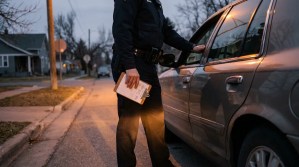
During a driving under the influence (DUI) traffic stop in Montana, a police officer looks for evidence that someone is too drunk to drive safely. Oftentimes, they begin that process by asking certain questions. Depending on how a driver answers, a police officer might then ask them to exit the vehicle for additional screening.
Field sobriety tests are a way for law enforcement professionals to try to gauge an individual’s likelihood of chemical impairment. There are three standardized tests largely recognized as effective means of screening people for drunk driving.
The walk-and-turn test
The walk-and-turn test looks at balance and coordination. An officer instructs the driver to walk in a straight line to a particular point. They must then turn 180° and walk back along the same line. Stumbling, especially during the turn, can be an indicator of intoxication.
The one-leg-stand test
A police officer may also instruct someone to stand on one leg. This test may also involve moving the arms back and forth or performing simple logic tasks. Someone who cannot stay balanced for the duration of the test and who must repeatedly put down their leg may fail the test.
The horizontal gaze nystagmus test
The horizontal gaze nystagmus test does not look at physical coordination but instead involuntary muscle function. An officer instructs someone to follow their finger or a pen from side to side with their eyes without moving their head. When the eye moves to the side, a muscle twitch typically occurs. That twitch becomes substantially more pronounced when someone is under the influence of alcohol.
Failing one or more of these field sobriety tests could justify an officer’s decision to arrest someone. Once an officer has the probable cause they need to arrest a driver, they could also then demand chemical testing. Failing a field sobriety test does not guarantee that someone is under the influence.
Drivers can potentially fail field sobriety tests for a variety of reasons other than just intoxication. Using one’s rights during a traffic stop and responding appropriately after arrest can help people fight back against pending DUI charges. Field sobriety tests may give an officer grounds to arrest someone but do not universally prove that someone had too much to drink before driving.