Understanding the Role of Prior Convictions in a Montana Felony DUI
Key Takeaways: In Montana, a DUI becomes a felony on the fourth or subsequent offense, making each prior conviction classification critical to your exposure. Challenging even one defective conviction can reduce charges or change the outcome. The strongest challenges rest on the right to counsel, since any waiver must be made specifically, voluntarily, and knowingly. A defendant can present an affidavit and testimony to shift the burden to the State. Out-of-state and tribal court convictions count through comity but remain subject to validity review, accuracy checks, and statutory exclusions. Credibility, corroborating documentation, and BAC figures attached to priors all influence whether a challenge succeeds. Because these issues are technical and fact-intensive, a careful audit of your record with a knowledgeable Missoula felony DUI attorney is essential.
A prior DUI conviction is not always set in stone, and challenging one can change your case’s entire trajectory. In Montana, the difference between a misdemeanor and a felony often depends on how many qualifying prior offenses the State can prove. Section 61-8-1008, MCA, provides that a fourth or subsequent DUI conviction is a felony, making every prior conviction worthy of scrutiny. If one prior is constitutionally defective, the felony enhancement may not hold.
For anyone facing a felony DUI Montana charge in Missoula, understanding how priors are counted, classified, and contested is essential. This guide explains the legal framework, governing doctrines, and practical hurdles defendants commonly encounter.
If you are researching your options, the team at Tipp Coburn Lockwood P.C. is ready to help. Call us at 406-506-0575 or reach out through our secure contact page to discuss your situation.
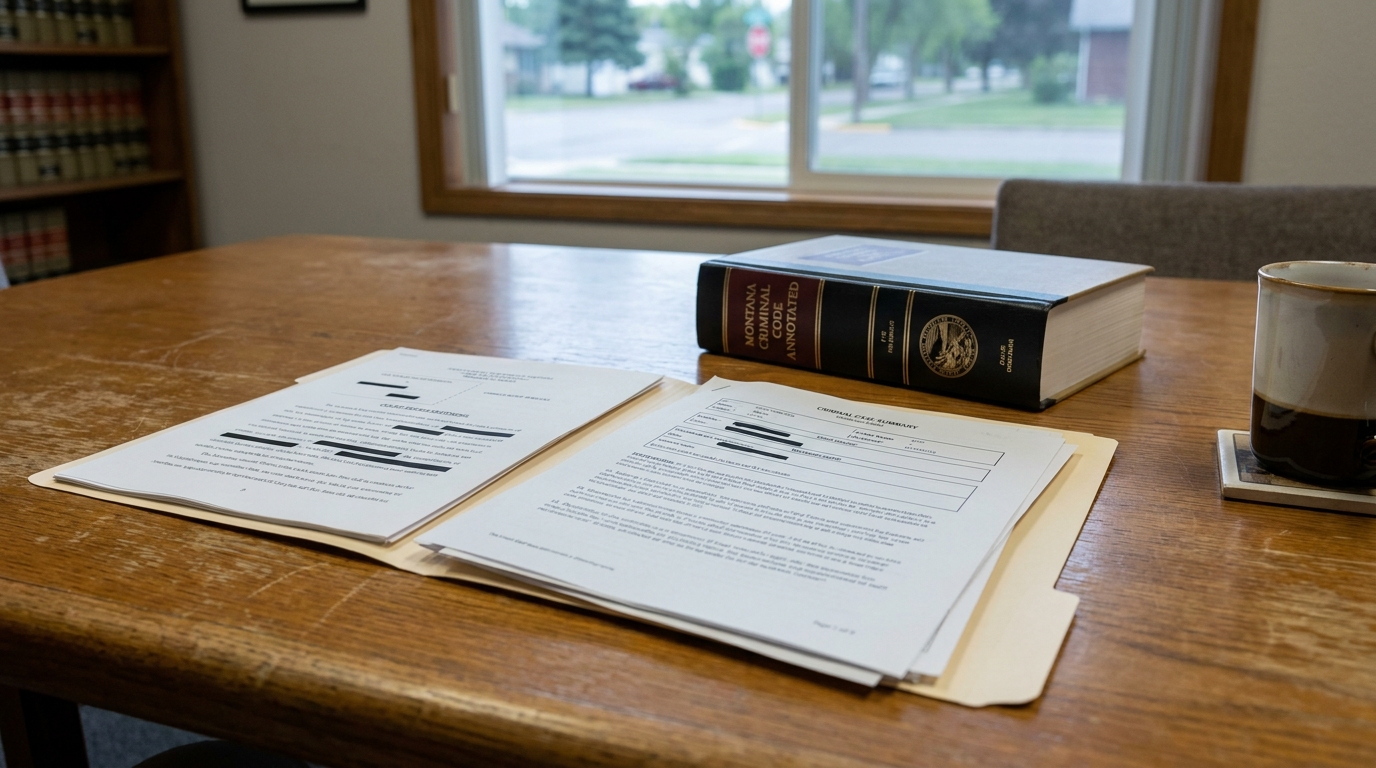
Why Felony DUI Montana Charges Hinge on Your Record
Montana law escalates DUI penalties based on prior offenses, making each prior conviction’s classification central to your case. MCA 61-8-1007 provides graduated penalties: first, second, and third offenses carry progressively harsher jail and fine ranges. Once a fourth offense is alleged, the case becomes a felony with sharply higher stakes.
Qualifying priors come from broader sources than many expect. Convictions aren’t limited to Missoula or Montana. Subsection (1)(c) counts similar offenses under previous Montana laws or another state’s laws. Additionally, prior convictions under 45-5-106 or 45-5-107 automatically escalate sentencing exposure, meaning prior vehicular homicide or vehicular assault can trigger felony treatment. Review the graduated penalty framework in the Montana DUI penalty statute.
💡 Pro Tip: Request certified copies of every prior conviction record early. Errors in dates, statute citations, or jurisdiction can affect whether a prior legally qualifies.
The Constitutional Foundation for Challenging a Prior
The strongest challenges generally rest on the right to counsel. Montana courts apply a presumption of regularity to prior convictions, requiring a defendant to produce affirmative evidence to overcome that presumption and show a constitutional infirmity. Any waiver of the right to counsel must be made voluntarily, knowingly, and intelligently. If a prior conviction was obtained without a valid waiver of counsel, it may be vulnerable to attack.
Defendants carry an initial burden before the State must respond. A defendant may present direct evidence in an affidavit and through testimony to shift the burden to the State to prove the prior conviction was not obtained in violation of his rights. This burden-shifting framework is where many prior conviction defense Montana strategies begin.
The State has tools to rebut these challenges. In one case, the State responded with an affidavit by a Justice of the Peace attesting that she made a general practice of advising each criminal defendant of their constitutional rights, including the right to an attorney. Evidence of routine courtroom practice can defeat a challenge, making the quality and specificity of your evidence critical.
Why Credibility Can Make or Break a Challenge
Your testimony must withstand scrutiny, because courts weigh credibility closely. Vague or inconsistent recollections undermine otherwise viable challenges. In one case, the court found that a defendant’s confused recall of the presiding judge cast serious doubt on his testimony. The lesson: precise, well-documented facts carry more weight than general assertions.
The detailed reasoning courts apply appears in the published State v. Walker decision, which discusses how Montana evaluates both defendant evidence and State rebuttals.
💡 Pro Tip: Before signing an affidavit challenging a prior, gather corroborating records such as docket sheets or audio logs. Independent documentation strengthens credibility far more than memory alone.
Tribal Court and Out-of-State Priors
Tribal court DUI convictions present a distinct legal question. Many defendants assume an uncounselled tribal conviction cannot count, but Montana law treats the issue through comity. Comity requires Montana courts to give full effect to valid judgments of a foreign jurisdiction according to that sovereign’s laws, rather than the Sixth Amendment standard applying to Montana proceedings. A conviction from a federally recognized tribe may enhance a DUI sentence.
This doesn’t mean tribal priors are immune from review. A defense may examine whether the conviction was valid under relevant tribal law, whether the record is accurate, and whether the offense qualifies under Montana’s counting rules. These are fact-sensitive questions with outcomes depending on the specific record.
Certain convictions are statutorily excluded as priors. For example, a conviction under the minor DUI provisions may not be counted as a prior offense under 61-8-1007, 61-8-1008, and 61-8-1011. Identifying an excluded prior can sometimes reduce the offense level entirely.
Standard Versus Aggravated DUI Classification
DUI classification as standard or aggravated significantly affects sentencing. High blood alcohol concentration allegations can trigger enhanced treatment. Montana has enacted enhanced sanctions for offenders found to have a high BAC. These enhancements carry meaningful consequences, since aggravated DUI penalties include mandatory minimum jail terms exceeding standard ranges for first, second, and third offenses.
The table below summarizes general distinctions. Actual penalties vary by facts, prior history, and charging decision.
| Issue | Standard DUI | Aggravated DUI |
|---|---|---|
| Typical trigger | Baseline impairment | High BAC or other aggravators |
| Mandatory minimums | Lower | Higher, escalating with priors |
| Effect of priors | Counts toward felony | Counts and may increase minimums |
National data explains why high-BAC enhancements exist. In 2009, 56 percent of drivers who had been drinking and were involved in fatal crashes had a BAC of.15 or greater. While many states use a.15 threshold for high-BAC enhancements, Montana’s aggravated DUI threshold is.16, so the recorded BAC in your prior cases can directly affect classification.
💡 Pro Tip: Ask your attorney to verify the BAC figure attached to any prior. A disputed or unsupported BAC reading may affect whether aggravated classification was proper.
Sentencing Exceptions and Strategic Considerations
Montana recognizes limited statutory exceptions to mandatory minimums. Courts apply these narrowly, but they may inform sentencing arguments. MCA 46-18-222 lists six exceptions, including when the offender’s mental capacity was significantly impaired or the offender acted under unusual and substantial duress. Whether any exception applies is fact-dependent.
Felony DUI sentencing differs from Montana’s most severe repeat-offender laws. MCA 46-18-219(1)(a) mandates life without parole for repeat offenders convicted of enumerated violent or sexual offenses, DUI is not among them.
Common approaches in a Montana DUI case strategy include:
- Auditing each prior conviction for a valid waiver of counsel
- Confirming whether a prior is statutorily excluded from counting
- Verifying jurisdiction, dates, and statute citations on the record
- Evaluating whether high-BAC or aggravator allegations were properly supported
Because these issues are technical, guidance from a knowledgeable Missoula felony DUI lawyer matters. A focused review of your record through our felony DUI defense Missoula practice can identify which priors are worth contesting. For broader reading, our DUI case strategy resources offer additional background.
Frequently Asked Questions
-
Can an old DUI from another state count against me in Montana?
Yes, out-of-state priors can count. A similar offense under previous Montana laws or another state’s laws may count toward aggravated DUI treatment, though the conviction must qualify and be accurately documented. -
Does a tribal court DUI count toward a felony enhancement?
It generally can. Comity requires Montana courts to give full effect to valid judgments from foreign jurisdictions according to that sovereign’s laws rather than the Sixth Amendment standard, so a valid tribal conviction may be used. -
What makes a prior conviction vulnerable to challenge?
A missing or invalid waiver of counsel is a frequent basis. Montana courts apply a presumption of regularity to prior convictions, so a defendant must produce affirmative evidence to rebut that presumption. Any waiver of a constitutional right must be made voluntarily, knowingly, and intelligently. -
What evidence do I need to challenge a prior?
You generally need direct evidence. A defendant may present an affidavit and testimony to shift the burden to the State to prove the prior conviction was not obtained in violation of his rights, but credibility and corroboration are critical. -
When does a DUI become a felony in Montana?
Usually on the fourth offense. Section 61-8-1008, MCA, provides that a fourth or subsequent DUI is a felony, subject to how priors are counted.
Protecting Your Future Starts With Scrutinizing the Past
Challenging prior convictions is one of the most powerful tools in a felony DUI Montana defense. Because each qualifying prior increases your exposure, identifying a constitutionally defective, miscategorized, or statutorily excluded conviction can reduce charges or change the outcome entirely. These challenges are fact-intensive, and results depend on your specific record. What you can do is ensure every prior is examined carefully and contested where the law supports it.
A skilled Montana DUI defense attorney can help you evaluate whether a prior conviction challenge fits your circumstances. To discuss your case with Tipp Coburn Lockwood P.C., call 406-506-0575 or send us a message through our confidential case review form today.