How Comparative Fault Affects Your Missoula Car Accident Claim
After a car accident in Missoula, one of the first questions injury victims face is whether they can still recover compensation if the insurance company claims they were partially at fault. Montana follows a modified comparative negligence model with a 51 percent bar, meaning you may pursue damages as long as your share of fault does not exceed 50 percent. Under Montana Code Annotated (MCA) § 27-1-702, contributory fault does not bar recovery if it was not greater than the fault of the defendant or combined defendants. If you share some blame, your damages are reduced proportionally rather than eliminated entirely.
If you were hurt in a collision and have questions about how fault may affect your case, Tipp Coburn Lockwood P.C. is here to help. Call 406-506-0575 or reach out online to discuss your options.
What Montana’s Modified Comparative Fault System Means for Drivers
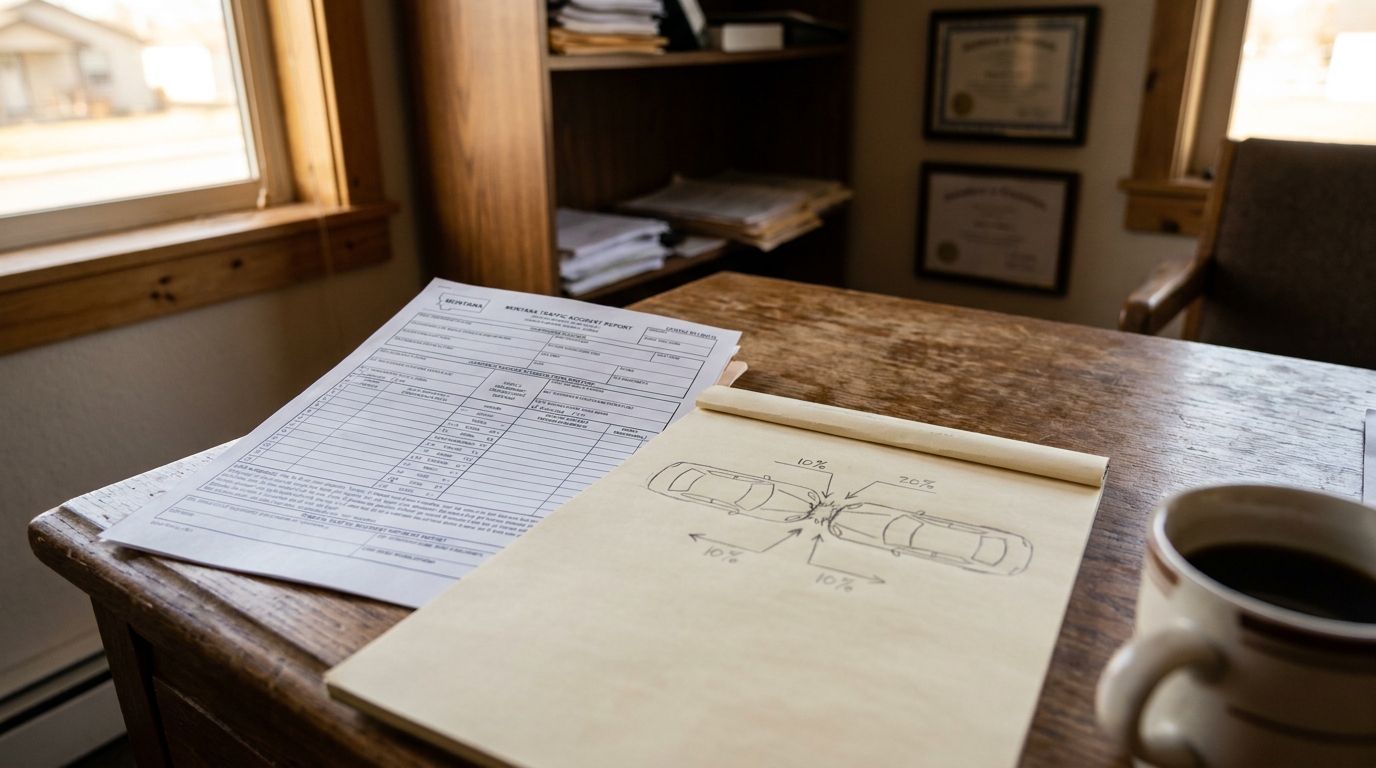
Montana’s approach to shared fault sits in the middle of the spectrum used across the country. While some states follow contributory negligence (barring recovery if the plaintiff is even one percent at fault), Montana uses modified comparative negligence with a 51 percent bar, permitting recovery as long as your fault is not greater than 50 percent.
This distinction directly controls whether you receive compensation. Under MCA § 27-1-702, the statute applies to damages for negligence resulting in death, injury, or property damage, covering nearly every car accident scenario. The comparative fault rule accounts for the fault of all persons against whom recovery is sought, so even with multiple parties, the analysis examines everyone’s conduct.
💡 Pro Tip: After any auto accident in Missoula, write down everything you remember about the other driver’s behavior, road conditions, and traffic signals while details are fresh. This information can be critical when fault percentages are debated.
The Four Elements of Negligence Every Plaintiff Must Prove
Before comparative fault percentages enter the picture, you must first establish that the other driver was negligent. Negligence requires proving four elements: duty, breach, causation, and damages.
Every motorist in Missoula has a legal obligation to operate their vehicle safely and follow traffic laws. When a driver speeds through an intersection, drifts out of lane, or fails to yield, that conduct may constitute a breach of duty. The question of breach is fact-specific, depending on road conditions, visibility, weather, and traffic patterns.
Proving the other driver’s breach actually caused your injuries is equally important. You must draw a direct line between the negligent conduct and your harm. Damages include medical bills, lost wages, pain and suffering, and property repair costs. Without documented injuries and losses, even a clear breach may not support a viable claim.
💡 Pro Tip: Keep every medical record, repair estimate, and pay stub related to your accident organized in one place. Strong documentation makes it harder for insurance companies to minimize what you’re owed.
How the 51 Percent Bar Works in a Car Accident Lawyer in Montana Case
The 51 percent bar separates partial recovery from no recovery. If a jury determines you were 30 percent at fault and the defendant 70 percent, you can still recover damages reduced by your 30 percent share. For example, with $100,000 in total damages and 30 percent fault, you would recover $70,000.
If your fault reaches 51 percent or higher, Montana law bars any recovery. The table below illustrates how fault allocations affect a hypothetical $100,000 claim:
| Your Fault Percentage | Defendant’s Fault | Recovery Allowed? | Amount You Receive |
|---|---|---|---|
| 10% | 90% | Yes | $90,000 |
| 25% | 75% | Yes | $75,000 |
| 49% | 51% | Yes | $51,000 |
| 50% | 50% | Yes | $50,000 |
| 51% | 49% | No | $0 |
This sliding scale is why exact fault determination carries enormous weight in every Montana car crash dispute. Insurance adjusters understand this math and may try to push your fault percentage above 50 percent to eliminate their obligation entirely.
💡 Pro Tip: Be cautious when giving recorded statements to an insurance adjuster. Adjusters may use your words to argue a higher fault percentage. Consider speaking with a car accident lawyer in Missoula before providing any formal statement.
Tonner v. Cirian: Why Fault Is Rarely Black and White
Real-world accidents seldom involve only one careless driver. In Tonner v. Cirian, the Montana Supreme Court reversed summary judgment, holding that genuine issues of material fact existed concerning comparative negligence. The court found that even when one driver violated a right-of-way statute, the other driver’s duty to maintain a proper lookout remained a genuine issue precluding summary judgment.
This case underscores an important point for Missoula accident victims. Even if the other side argues you broke a traffic rule, other factors like the defendant’s failure to keep a proper lookout can shift fault back in your favor. Courts examine the totality of circumstances.
How Insurance Companies Use Comparative Fault Against You
Insurance companies routinely invoke comparative fault Montana law to reduce or deny claims. An adjuster may argue you were speeding, failed to signal, or didn’t brake quickly enough to inflate your responsibility. Their goal is straightforward: the higher your fault percentage, the less they pay. Above 50 percent, they pay nothing.
Common Tactics to Watch For
Adjusters may request broad medical authorizations, review your social media, or interpret police reports favorably to their insured driver. Common strategies include:
- Citing vague police reports to suggest shared fault
- Using your statements from the scene against you
- Arguing pre-existing conditions caused your injuries
- Delaying claims to pressure low settlements
Recognizing these tactics early helps protect your claim’s full value. Documentation, witness statements, and accident reconstruction can counter unfair blame-shifting.
💡 Pro Tip: Avoid posting about your accident, injuries, or activities on social media while your claim is pending. Insurance companies monitor these platforms for content to dispute your injuries or argue greater fault.
Steps to Protect Your Rights After a Missoula Car Accident
Taking the right steps immediately after a collision strengthens your position. Evidence fades quickly, witnesses forget details, and deadlines are firm. Montana generally allows three years from the date of injury to file a personal injury lawsuit under MCA § 27-2-204.
Preserving Evidence Early
Photographs of vehicle damage, skid marks, traffic signals, and road conditions carry significant weight. Obtain the police report, collect witness contact information, and seek medical attention promptly even if injuries seem minor. Medical records created close to the accident help establish causation.
Getting Legal Guidance
An experienced auto accident attorney in Missoula can evaluate your crash, identify liable parties, and build a case accurately reflecting the other side’s fault. Early legal involvement helps ensure you don’t inadvertently provide information insurers use to inflate your fault percentage. Explore additional resources on our Missoula injury attorney blog for more guidance.
💡 Pro Tip: If you receive a settlement offer before consulting an attorney, don’t assume it reflects your case’s true value. Initial insurer offers frequently undervalue claims, particularly when comparative fault is disputed.
Frequently Asked Questions
1. Can I still recover damages if I was partially at fault for a car accident in Montana?
What does Montana law say about partial fault?
Yes, in most cases. Under MCA § 27-1-702, Montana’s modified comparative fault system allows recovery as long as your fault percentage does not exceed 50 percent. Your award is reduced by your share of fault.
2. What happens if I am found 51 percent or more at fault?
Is there any recovery above the 50 percent threshold?
No. If your fault reaches 51 percent or higher, Montana law bars any recovery from the other party. This is why accurately establishing fault is critical in every Missoula car accident claim.
3. How does the insurance company determine fault after an accident?
What factors do insurers consider?
Adjusters review police reports, witness statements, vehicle damage, traffic camera footage, and physical evidence. They also consider traffic law violations. However, their assessment isn’t final, and you can challenge their fault determination through negotiation or litigation.
4. Does Montana consider the fault of people who are not named in my lawsuit?
Can nonparty fault affect my recovery?
Yes. Under MCA § 27-1-702, comparative fault analysis accounts for the fault of all persons against whom recovery is sought, and related provisions allow defendants to place nonparty fault before the jury. This allocation can influence whether your fault crosses the 51 percent bar.
5. How long do I have to file a car accident injury claim in Montana?
What are the filing deadlines?
Montana generally provides a three-year statute of limitations for personal injury claims under MCA § 27-2-204. Property damage claims may have shorter deadlines. These run from the date of injury or damage. Courts interpret tolling exceptions narrowly, so waiting can risk your entire claim.
Protecting Your Right to Fair Compensation in Missoula
Montana’s comparative fault system gives injured drivers a real opportunity to recover compensation, but that opportunity depends on how well you document and present your case. From preserving scene evidence to countering insurer tactics that unfairly inflate your blame, every step after a crash matters. The difference between recovering full value and walking away with nothing can come down to a single percentage point.
If you or a loved one suffered injuries in a Missoula car accident and have questions about how fault may affect your recovery, Tipp Coburn Lockwood P.C. can help you understand your rights. Call 406-506-0575 or contact us today to schedule a consultation and take the first step toward the compensation you deserve.